If you are bringing a dog to a groomer for the first time and the coat has tangles, you will hear a word worth understanding before the appointment: matting. A mat is not a knot on the surface. It is a dense mass of hair that has wound, compressed, and locked together down at the skin, and it behaves less like messy hair and more like a piece of felt glued over the dog. First-time owners are often surprised that the answer is sometimes a short clip instead of a brush-out, and they deserve a step-by-step explanation of why, rather than a shrug at pickup.
This walkthrough follows a first grooming visit at Whiskers Nails & Puppy Dog Tails in Shelby for a dog with a matted coat: how the mats formed in the first place, what the groomer checks, what dematting can and cannot do, and where the humane line sits that every good groomer works to.
How a mat actually forms
Loose hair sheds from the coat constantly. In a brushed coat, that loose hair leaves. In an unbrushed coat, it stays, tangles with the living hair around it, and begins to wind. Friction does the tightening: behind the ears where a dog scratches, under the collar, in the armpits and between the back legs where legs rub, in the beard and on the chest of dogs who love water. Each bath taken without a full brush-out and dry makes it worse, because wet tangled hair dries tighter, like wool felting. Add Shelby humidity, a swim, or a week of rain-soaked yard time, and a soft tangle in March can be a solid mat by May.
Coat type decides the speed. Curly and wavy coats, doodles and poodles especially, mat fastest because the shed hair corkscrews into the coat instead of falling out. Double coats mat when the undercoat packs down unbrushed during shedding season. Long silky coats mat at the friction points. Short smooth coats are the only ones largely exempt, and even they can pack undercoat at the neck. No owner mats a dog on purpose. It happens gradually, under a coat that looks fluffy and fine from above while the base layer quietly locks up.
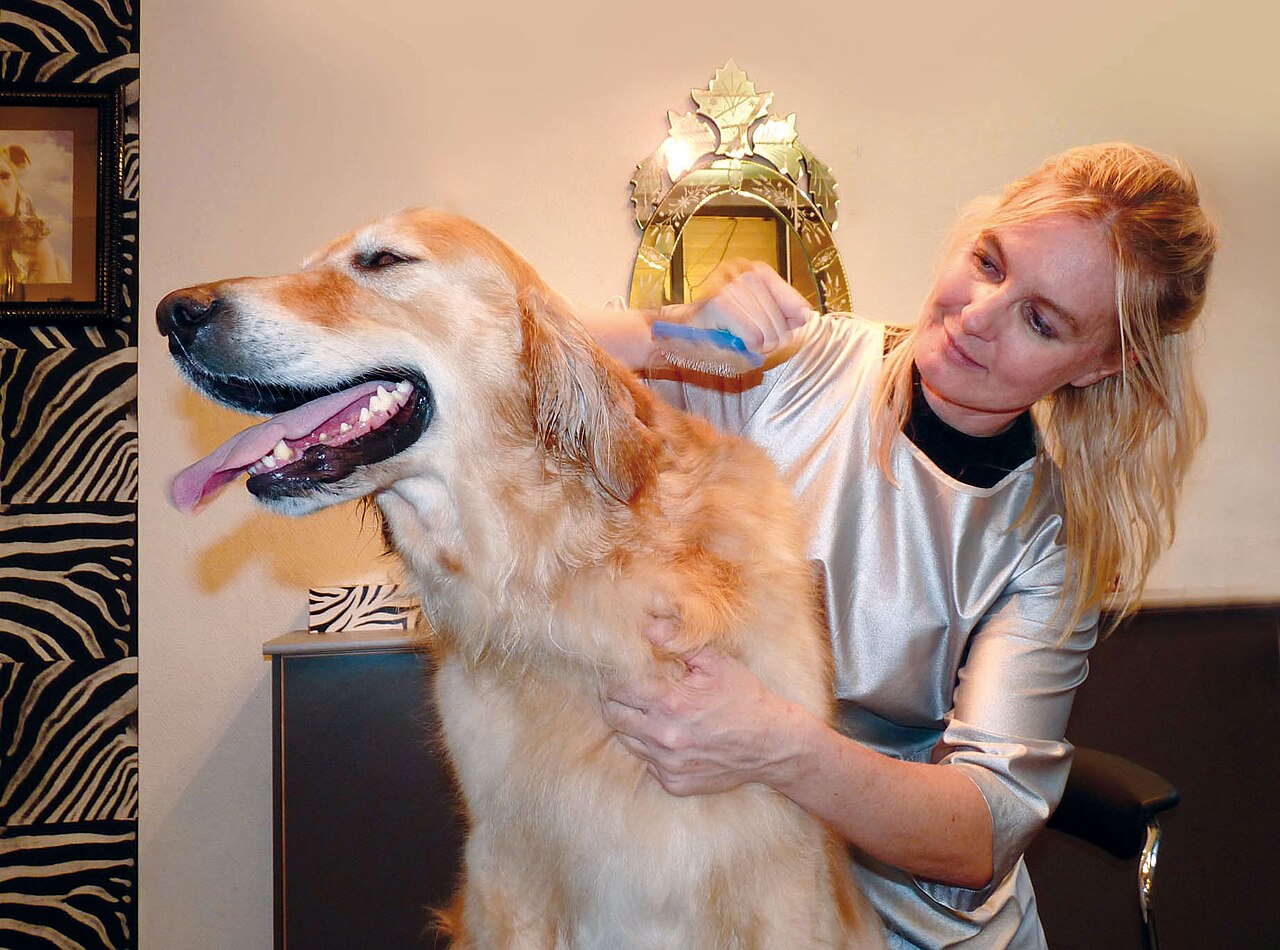
Your first visit, step by step
- The groomer checks the coat by hand before promising anything. Fingers go down to the skin at the friction points, not over the top of the coat. A comb test follows: if a comb cannot pass through to the skin, that area is matted, whatever it looks like from above.
- You hear an honest assessment of severity. Light tangles at the surface, a few defined mats, and a fully pelted coat are three different appointments. The groomer will separate them for you and explain what each area needs, rather than giving one verdict for the whole dog.
- Loose tangles get brushed and combed out. With a slicker brush, a comb, and detangling product, surface tangles in a dog who tolerates it are normal first-visit work. This is the part owners can learn to do at home afterward.
- Defined mats get a decision, one by one. A mat that can be split and worked out in a reasonable time without hurting the dog may be dematted. A mat tight to the skin, or one covering a large area, usually cannot, and the groomer will recommend clipping under it instead.
- Pelted areas are clipped out carefully. Clippers slide between the mat and the skin, which is slow, skilled work, because matted skin is often irritated, thin, or hiding sores, moles, and debris the mat concealed. Surprises under pelts are common, and the groomer will show you anything found.
- The dog gets bathed and finished at the length the coat allows. A first matted groom often ends shorter than the photo an owner brought. That is the coat's condition deciding, not the groomer's preference, and the fresh start is what makes the next groom the one in the photo possible.
Why dematting has limits
Dematting pulls. Even done skillfully, working a tight mat apart tugs at the skin hundreds of times, and a dog experiences it as an endurance test of brushing on tender, sometimes already inflamed skin. There is a point, usually well before the mat is fully out, where continuing stops being grooming and starts being a dog suffering for a hairstyle. Professional groomers draw that line on the dog's behalf, because the dog cannot. Time is the other limit: hours of dematting on one dog is rarely fair to the dog or feasible in a working salon.
There is also a skin limit. Mats trap moisture and air out poorly, so the skin beneath is frequently red, yeasty, or bruised from the mat's constant tension, and tight mats can restrict movement and even cut off comfortable circulation to an ear flap, where a hematoma can follow a sudden release. Brushing hard over compromised skin makes it worse. Clipping the mat away lets the skin be seen, cleaned, and healed. Hair grows back, usually within weeks to a couple of months depending on the coat. Skin and trust take longer to repair if the visit becomes an ordeal, and a dog who dreads grooming is a problem that compounds at every future appointment.
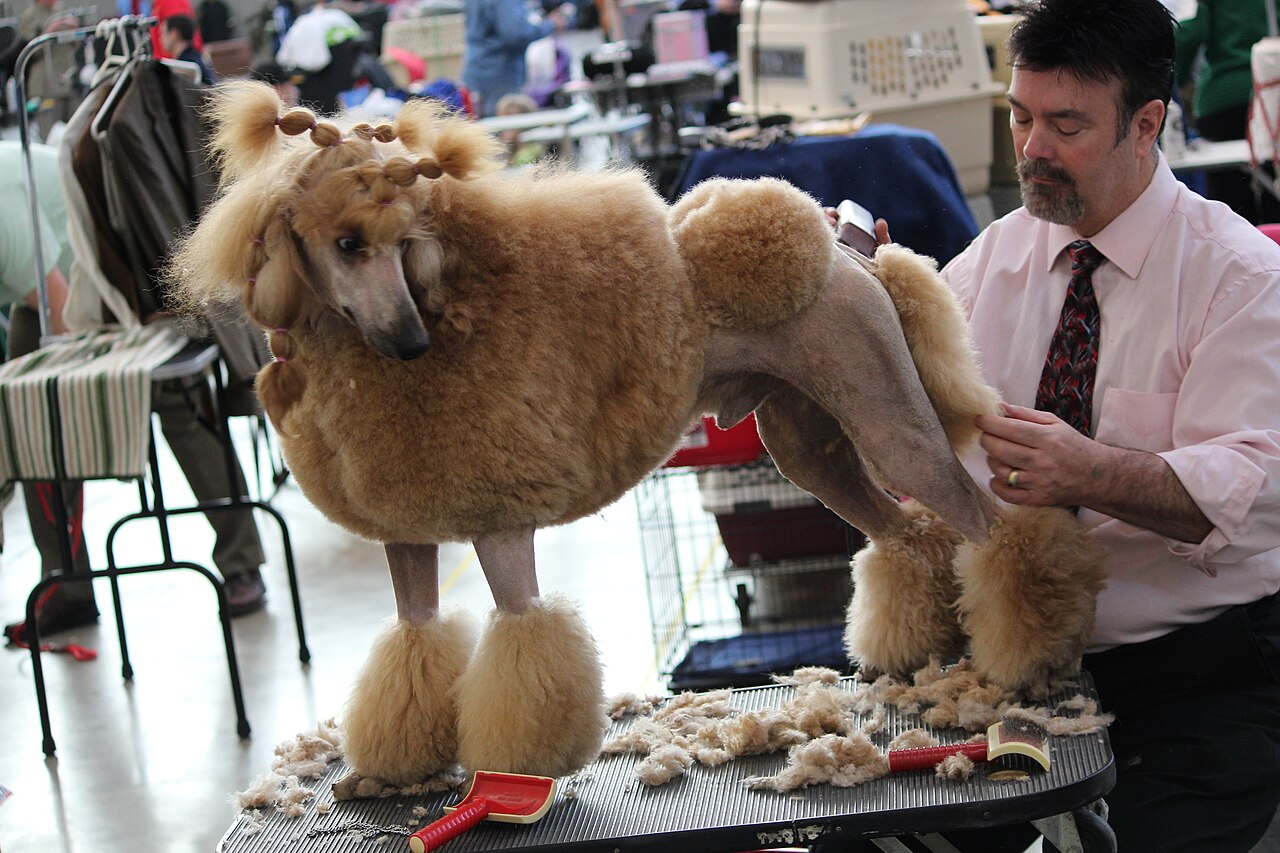
Keeping it from happening again
After a fresh start, prevention is modest and specific. Brush down to the skin, not over the top, a few times a week for curly and long coats, using a slicker brush followed by a comb to verify the brush actually got through. Pay rent to the friction points every time: ears, collar area, armpits, belly, and tail. Never bathe a tangled dog without brushing first and drying fully after. And keep a grooming rhythm of four to eight weeks depending on coat, because mats are a calendar problem more than a character flaw. The owners who succeed after a matted first visit are the ones who leave with a schedule, not a scolding.
Common questions
Can all mats be brushed out if I am willing to pay for the time?
No. Tight, pelted mats cannot be removed without hurting the dog and damaging already irritated skin, regardless of time or budget. Clipping them out and regrowing the coat is the humane and standard answer.
How long does a clipped-out coat take to grow back?
Most coats look reasonably full again within several weeks to a couple of months, depending on breed and coat type. The skin underneath usually improves much faster once air and cleaning can reach it.
Why did the groomer say my dog was matted when the coat looked fluffy?
Mats form at the skin under a fluffy top layer, so a coat can look full while the base is locked. The comb test tells the truth: if a comb cannot reach the skin, that section is matted.
Photos in this guide are representative stock images.
← All guides from Whiskers Nails & Puppy Dog Tails← Back to Whiskers Nails & Puppy Dog Tails