You can hear a dog's nail schedule before you can see it. Nails clicking on hardwood, tapping on the kitchen tile, catching on carpet: that sound means the nails are reaching the floor and changing how the foot lands. Dog nails grow continuously, and unlike a wild dog's, a house dog's nails in Shelby do not wear down enough on sidewalks and yards to maintain themselves. Trimming is regular maintenance, like brushing, and the seasons in Piedmont North Carolina change how fast the job comes around and how easy it is to stay ahead of it.
This guide explains what is inside a dog's nail, why that anatomy sets the trimming rules, and gives you a seasonal checklist to work through at home. It also covers the real choice most owners face: clipping versus grinding, and how black nails change the approach at Whiskers Nails & Puppy Dog Tails or at your own kitchen table.
What is inside the nail: the quick
A dog's nail is a hard keratin shell wrapped around a living core called the quick. The quick contains blood vessels and nerves, and it is why trimming has a hard limit. Cut into it and the nail bleeds and hurts, which the dog remembers clearly the next time the clippers come out. Leave the nail long for months and a second problem develops: the quick itself grows longer inside the nail. A long-neglected nail cannot simply be cut back to ideal length in one visit, because the quick is in the way. It has to be shortened gradually, a little at a time over repeated trims, while the quick recedes between sessions.
On white or light nails, you can see the quick as the pink area inside the nail, and the safe cut is a couple of millimeters beyond it. On black nails it is invisible from outside. The method there is to shave thin slices and watch the cut surface: it starts chalky white or gray, then shows a darker oval in the center as you approach the quick. That dark spot is the stop sign.
Clippers cut in one action and suit most nails, with guillotine and scissor styles sized to the dog. Grinders, rotary tools with a sanding surface, remove nail gradually, leave a smoother edge, and let you work closer to the quick with less risk of a sudden deep cut. Many dogs accept grinding better once they are used to its sound and vibration, and many do not. The best tool is the one your dog tolerates calmly, because a wrestling match is where accidents happen, whichever tool you hold.
Seasonal dog nail checklist
- Spring, mud and growth: pass if nails are checked every two weeks as activity rises after winter; fail if clicking on floors has been audible for a month, which means length is already changing the dog's gait.
- Spring, paw inspection: pass if you check between toes for red clay caked and dried after wet yard days; fail if debris sits packed between pads, which irritates skin and hides a cracked nail.
- Summer, pavement wear: pass if you credit hard-surface walks honestly, since concrete wears tips but rarely the dewclaws; fail if you skip dewclaws all summer, because unworn dewclaws curl and can grow into the pad.
- Summer, heat rule: pass if nail checks happen indoors in the cool part of the day with a calm dog; fail if trimming is attempted on a panting, overheated dog just in from a walk, when fidgeting is guaranteed.
- Fall, back to routine: pass if trims settle into a steady three-to-four-week rhythm as schedules normalize; fail if the plan is one big cut before the holidays after a season of growth, which the quick will not allow.
- Winter, indoor season: pass if you expect faster apparent growth, since carpet and less pavement wear nothing down; fail if clicking on hardwood in December surprises you, because winter is when indoor dogs need trims most reliably.
How often, and what overdue nails do
Most dogs need a trim every three to four weeks. Active dogs on pavement may stretch a little longer on their main nails, never on their dewclaws, and senior or indoor dogs often need the shorter end of the range. The test is simple and weekly: stand the dog on a hard floor and look and listen. Nails that just clear the floor are right. Nails that touch, click, or push the toes slightly upward are due.
Overdue nails are not a cosmetic issue. A long nail levers the toe with every step, changing how the foot loads and, over months, contributing to sore feet and stiffer movement, especially in older dogs. Long nails also snag: on carpet, on deck boards, on crate doors. A snagged nail can tear or break into the quick, which is painful and bloody and often a veterinary visit. Keeping a three-week rhythm is far easier on the dog than any of the repairs.
At home or at the groomer
Plenty of owners trim at home successfully, especially with a calm dog, good light, sharp clippers sized to the dog, and styptic powder on hand in case of a nick. The home rules are conservative ones: little at a time, stop at the first sign you are near the quick, and end the session on a success rather than pushing a stressed dog through all four feet in one sitting. Two feet today and two tomorrow beats a battle.
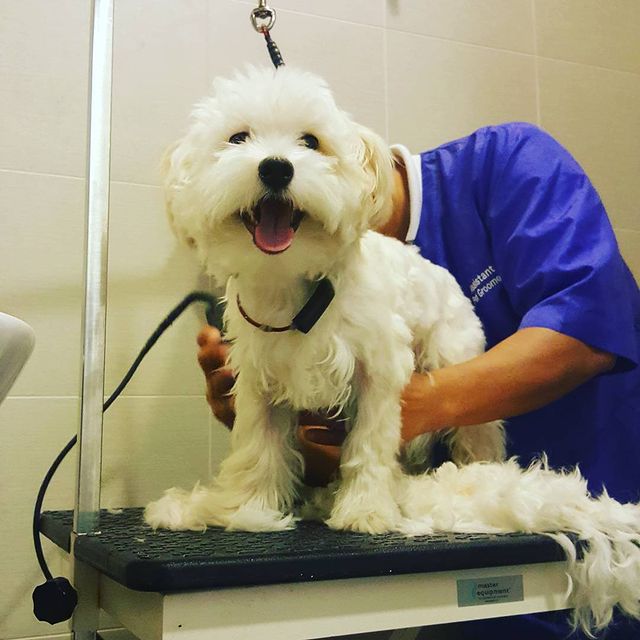
Hand the job to a groomer if your dog panics, if the nails are black and badly overgrown, if a quick has grown long and needs a gradual program, or if your own hands or eyesight make fine slicing unreliable. Groomers do this daily, have the table and restraint that keep a wiggly dog safe, and will tell you honestly if a nail looks like a veterinary matter instead, for instance a nail that is cracked up into the quick or a toe that is swollen.
Common questions
How can I tell if my dog's nails are too long?
Stand your dog on a hard floor. If the nails click, touch the floor, or push the toes up slightly, they are due. Nails at the right length just clear the ground when the dog stands normally.
What happens if I cut the quick?
The nail will bleed and it will hurt, so stay calm, apply styptic powder with gentle pressure, and keep the dog quiet while it stops, usually within minutes. If bleeding does not stop or the nail is torn, see a veterinarian.
Is grinding better than clipping?
Neither is better for every dog. Grinding gives a smoother edge and finer control near the quick, while clipping is faster and quieter. Your dog's tolerance decides, and many groomers clip first and grind to finish.
Photos in this guide are representative stock images.
← All guides from Whiskers Nails & Puppy Dog Tails← Back to Whiskers Nails & Puppy Dog Tails