Every June in Shelby, the same request arrives with the first heat wave: shave him down, he is so hot in all that hair. The instinct is kind and the logic feels obvious, but a dog's coat is not a sweater the dog cannot take off. For many breeds it is insulation that works in both directions, shading the skin and holding a layer of air that buffers heat as well as cold. Shaving it short can leave a dog hotter, sunburned, and with a coat that grows back changed. This how-to explains what to do instead for a comfortable summer dog, what you can handle at home, and where a groomer at Whiskers Nails & Puppy Dog Tails comes in.
How a double coat handles heat
Double-coated breeds, labs, goldens, huskies, shepherds, Pomeranians, and many mixes, carry a soft undercoat under longer guard hairs. In summer the undercoat sheds out and thins, and the remaining coat traps air near the skin. That air layer slows heat transfer from hot outside air to the body, while the guard hairs shade the skin from direct sun, which in North Carolina is the stronger effect. Dogs regulate heat mainly by panting and through their paw pads, not by sweating through the skin like people, so exposing more skin does not unlock a cooling system the way it would for a human in a T-shirt.
Shave that coat to the skin and three things go wrong at once. The shade and air buffer are gone, so sun hits skin directly and hot air reaches the body faster. The skin, which has never needed sun protection because the coat provided it, burns, sometimes in a single afternoon, with pink and white dogs and thin-coated bellies at highest risk. And the regrowth often comes back uneven: undercoat returns faster and thicker than guard hair, producing a fuzzy, dull coat that insulates worse and mats more, a change that can take a season or longer to normalize and in some older dogs never fully does.
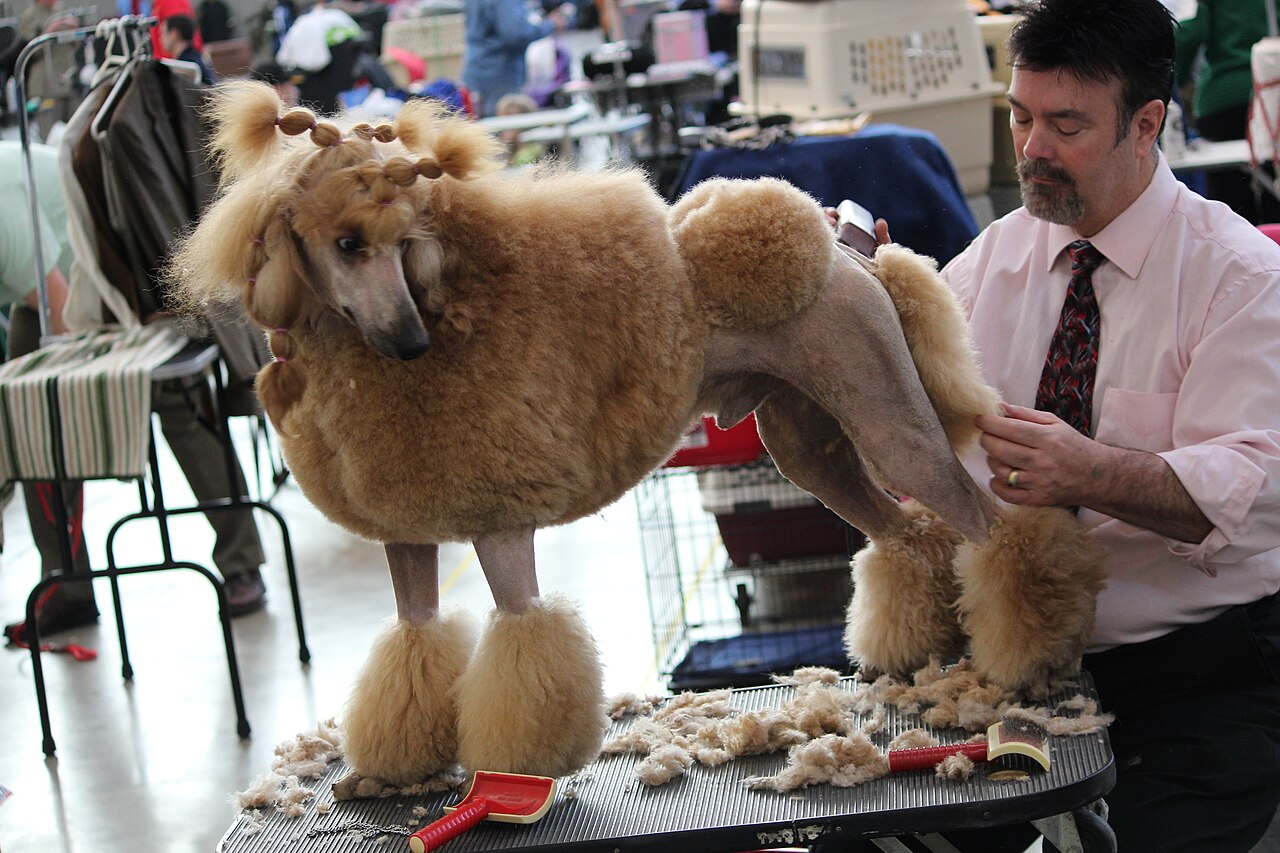
Single coats are a different case. Poodles, doodles, and other continuously growing coats do not have the same insulation system, and clipping them shorter for summer is normal, sensible grooming, as long as a layer is left for sun protection. The mistake is applying the poodle answer to the golden. Ask which coat your dog actually has before asking for the summer shave.
The practical summer how-to
- Brush the undercoat out instead of cutting it off. A thorough brush and comb-out, or a de-shedding treatment at the groomer, removes the loose undercoat that holds heat and mats. The guard coat left behind does its shading job at full length.
- Tidy, do not shave, the double coat. Feathering on legs, belly fringe, and pants can be trimmed neat and slightly shorter for cleanliness, and the belly can be clipped a bit closer to help the dog cool itself on cool floors, without touching the coat over the back and sides where the sun lands.
- For single coats, clip shorter but never to bare skin. Leave enough length to shade the skin, commonly a short but visible layer, and be extra careful with pink-skinned and white dogs, who burn fastest.
- Time the outdoors like you mean it. Walk in the early morning and evening in July and August. Midday exercise in Piedmont heat is the real overheating risk, and no haircut meaningfully changes that math.
- Run the pavement test every time. Press the back of your hand to the asphalt for several seconds. If it is too hot to hold comfortably, it is too hot for paw pads, which burn and blister on summer pavement in Shelby. Choose grass, shade, or a different hour.
- Protect bare spots directly. Noses, ear tips, shaved surgical patches, and any thin area get dog-safe sunscreen if your veterinarian approves the product, plus shade and indoor breaks. Never use this as a reason to shave more coat off. The coat was the sunscreen.
Signs you are seeing heat, not hair
Owners often credit the coat for distress that is actually heat management. Heavy panting that does not settle in the shade, drooling, bright red gums, wobbliness, or a dog seeking cool floors and refusing to move are overheating signals, and they call for stopping, cooling with water and air movement, and a veterinarian if they do not resolve quickly. Weight matters more than coat length here: an overweight dog in a full coat struggles, and so does a lean dog exercised at noon. Breeds with flat faces struggle most of all and need indoor summers regardless of grooming.
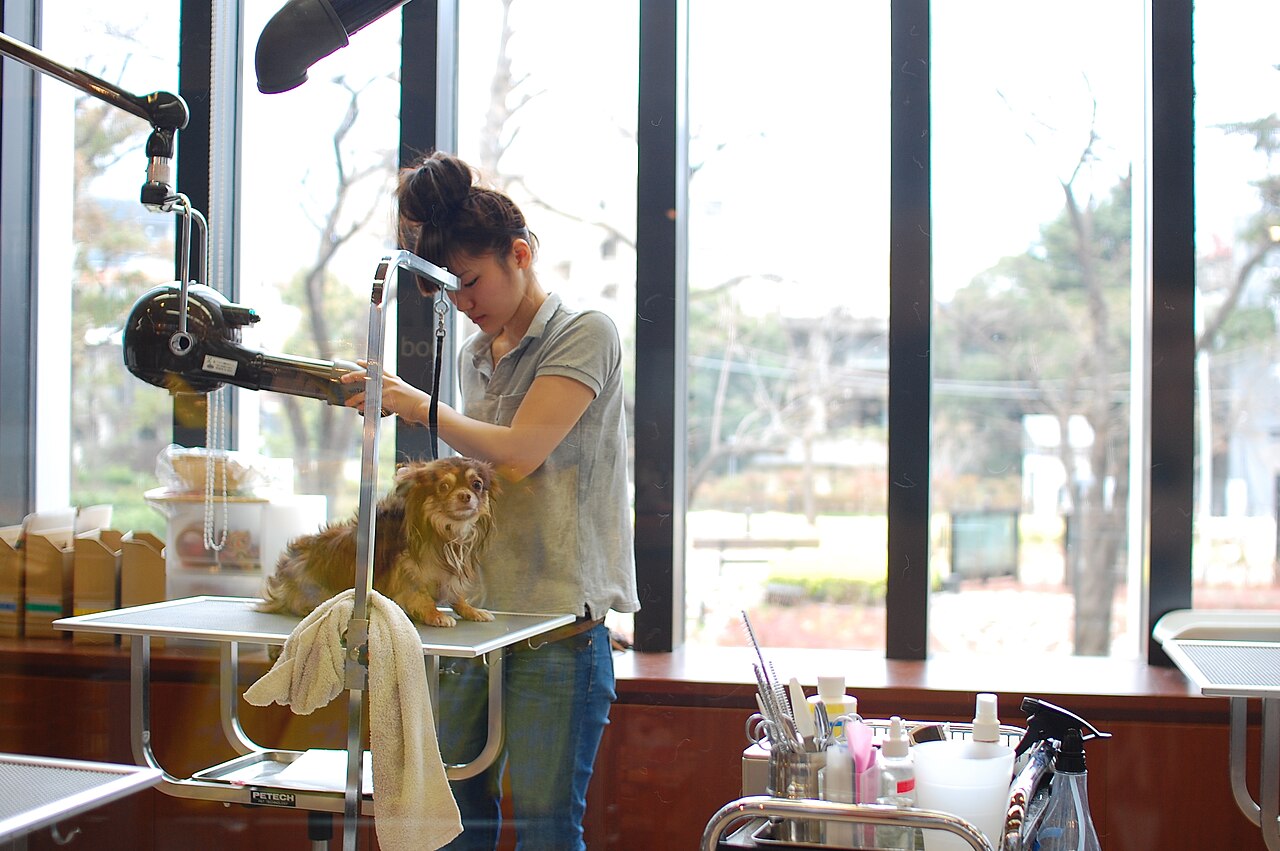
What a groomer can do for summer is substantial, just not a shave-down: a bath and high-velocity blow-out that strips the loose undercoat, a tidy trim, a belly clip, paw pad hair trimmed so pads contact cool floors cleanly, and a report on skin condition under all that coat. Dogs come out of that appointment visibly lighter and measurably more comfortable, with their insulation and sun protection intact. That, plus shade, water, and sane walking hours, is the whole summer program. The coat is not the enemy of a cool dog. It is part of the equipment, and in a Shelby summer, equipment you remove is equipment the dog has to live without in the sun.
Common questions
Will shaving my double-coated dog make him cooler?
Usually the opposite. The coat shades the skin and buffers hot air, so shaving removes protection and adds sunburn risk. Brushing out the loose undercoat and tidying the trim cools the dog without those costs.
Can a shaved double coat grow back normally?
Often it grows back unevenly, with thick undercoat returning faster than the guard hairs, and it can take a season or longer to look and function normally. In some dogs, especially older ones, the change lingers.
How short can I clip a poodle or doodle for summer?
Short is fine for these single, growing coats, but leave a visible layer over the skin for sun protection rather than clipping to bare skin, and watch pink or white dogs closely for sunburn.
Photos in this guide are representative stock images.
← All guides from Whiskers Nails & Puppy Dog Tails← Back to Whiskers Nails & Puppy Dog Tails